The short answer
More people now ask an AI assistant, or read the AI Overview at the top of Google, instead of scrolling through links. In BrightLocal's 2026 survey, 45% of consumers said they use ChatGPT or other AI tools for local recommendations, up from 6% a year earlier. The answers lean toward businesses that say clearly what they do, where they work and what they charge.
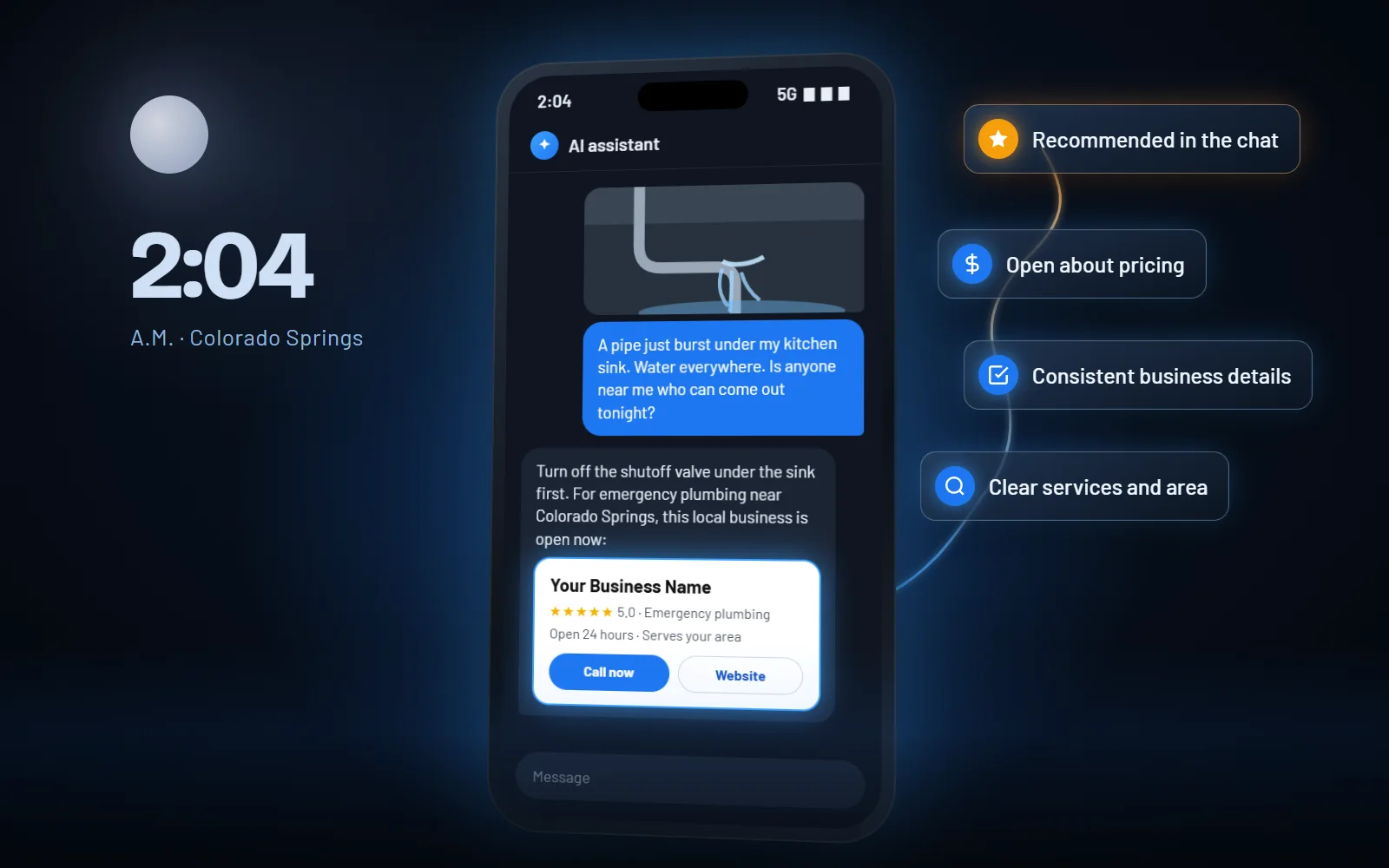
Picture the pipe that bursts at 2 a.m.
A pipe bursts at two in the morning. The homeowner takes a photo, opens ChatGPT and asks what the part is, whether they can fix it, how bad it is and whether anyone nearby can come out. People ask Alexa and Google Home the same kinds of questions. That moment, inside the conversation they are already having, is exactly where you want your business recommended.
Google now shows an AI Overview at the top of many searches, and a lot of people read the answer there instead of clicking a link. When the Pew Research Center tracked the browsing of 900 U.S. adults in March 2025, 18% of their Google searches showed an AI summary. On those visits people clicked a regular result 8% of the time, against 15% when no summary appeared. In my opinion, this is how most customers will find local businesses in the very near future.
What AI assistants look for
ChatGPT, Claude, Gemini, Grok and Copilot build an answer from what they can read and trust about you. From what I see, the businesses that get recommended tend to have:
- A website that says plainly what you do and where
- Open information about what you charge
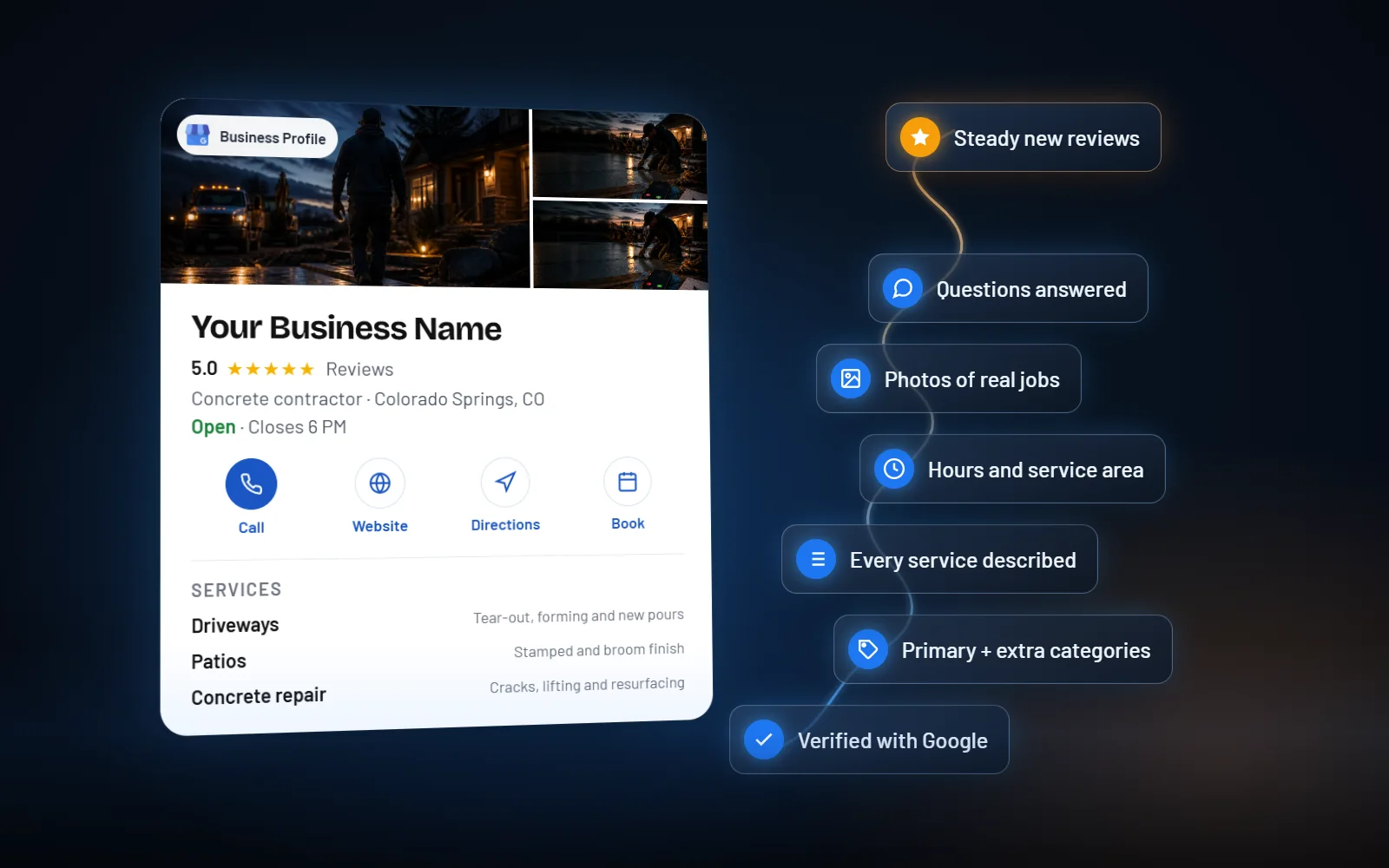
- A complete, active Google Business Profile
- Reviews and a reputation others can confirm
- The same name, address and phone number everywhere online
What that means for your website
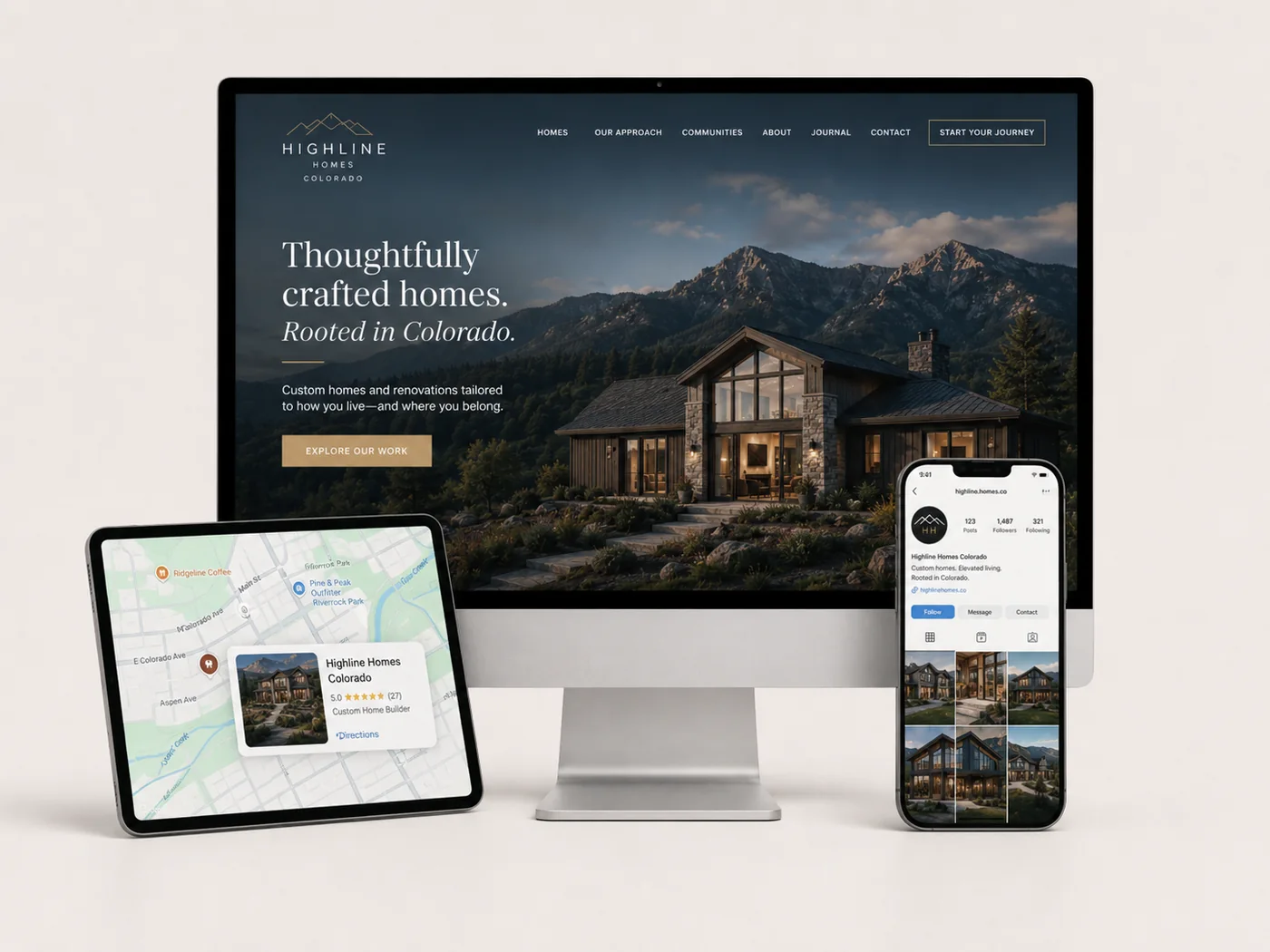
The old template, a headline and a bullet list of services, does not hold up in a conversation. Pages should be written the way customers ask: a clear question, a direct answer in the first few sentences, then the detail. Each main service deserves its own page, with structured data that tells search engines what the business is and where it works.
Say you're a plumber in Colorado Springs. That means pages that name the jobs you do, the parts of town you cover and whether you take emergency calls, written in plain words a customer would use. It's the same work we do on our own Colorado Springs SEO and AI search pages.
Google itself says there are no special tricks for its AI results: the same clear, useful pages that work in search are what it draws on.
Adapt one way or another
You can love AI or hate it. It does not change how your customers are starting to search. It is the same shift as the automobile replacing the horse and buggy, and the businesses that adapt will be the ones people hear about first.
Nobody can promise you a spot in an AI answer, and I will not. What I can do is make your business clear, consistent and easy to recommend.
Questions people ask
Does Google need special markup for AI Overviews?
No. Google says there are no additional requirements or special schema for AI Overviews and AI Mode. The same clear pages that work in regular search are what it draws on.
How can I tell whether AI assistants mention my business?
Ask them the way a customer would, for example "who can fix a water heater in Colorado Springs today?", and note who comes up. Answers change from one ask to the next, so check the same questions every month instead of trusting one result.
Can anyone guarantee my business shows up in ChatGPT?
No. Nobody controls those answers. What you can do is make your website, Google Business Profile and listings clear and consistent so you're easy to recommend.